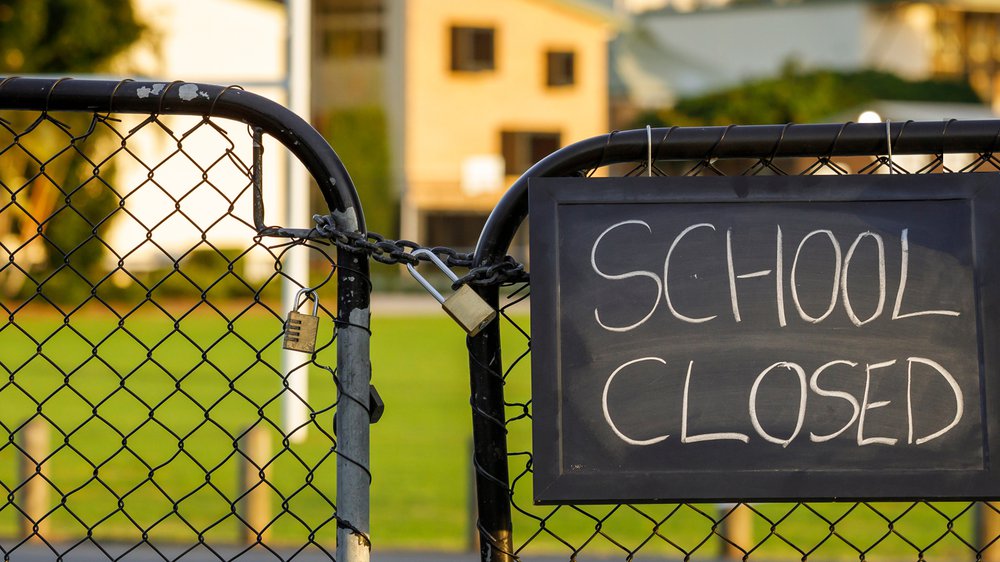
In a stark reflection of ongoing demographic and societal shifts, public school districts across the United States are announcing a record number of closures for the 2026-27 academic year and beyond. From urban centers like St. Louis and Cleveland to suburban and rural areas in West Virginia and Utah, at least 200 schools are slated for permanent shutdown or consolidation, with experts projecting an escalation to 1,000-1,500 annual closures by 2030—potentially totaling 7,000-10,000 nationwide. This surge is driven by plummeting enrollments, fiscal cliffs from expired pandemic aid, and aging infrastructure, but it also intersects with broader trends: an urban exodus that has hollowed out city schools and a growing consumer preference for smaller, more personalized educational settings over large, consolidated institutions.
A Nationwide Tally of Closures
The closures span nearly two dozen states, disproportionately affecting urban and declining districts. In Missouri, St. Louis Public Schools plans to shutter up to 37 schools—more than half its total—due to a sharp enrollment drop from 115,543 in 1967 to just 18,122 last year, exacerbated by family flight to suburbs. Kansas City Public Schools will close three campuses under its Blueprint 2030 plan. Ohio's Cleveland Metropolitan School District leads with 29 closures or mergers, addressing a 50% enrollment plunge over two decades and a $150 million deficit.
Texas sees aggressive action: Austin Independent School District proposes 10-13 campus closures to tackle 21,000 empty seats and a $19-20 million shortfall; Grand Prairie ISD eyes three, including Delmas Morton Elementary; Fort Worth ISD plans five; and Houston ISD is reviewing an unspecified number. In Florida, Orange County considers up to seven, while Broward County advances a multi-phase plan amid an 8,000-student drop.
Arizona's Kyrene District will close three elementaries (part of six by 2027-28), with scattered closures in Scottsdale and Phoenix areas. Further west, Colorado's Douglas County shutters three elementaries (Saddle Ranch, Heritage, and Acres Green), and Denver has up to four at risk for low performance. Nevada's Washoe County temporarily closes Pine Middle for reconstruction, while Douglas County analyzes more. Utah districts like Salt Lake City reconfigure Nibley Park, Canyons consolidates two elementaries, and Granite studies potentials.
In the Midwest and East, Pennsylvania's Pittsburgh closes nine buildings; Illinois' Evanston-Skokie weighs zero to two; Kentucky's Jefferson County targets Zachary Taylor Elementary, Liberty High, and a King/Maupin merger. Tennessee's Memphis-Shelby plans five initial closures (Frayser-Corning, Georgian Hills, Chickasaw Middle, Ida B. Wells Academy, Lucy), with up to 10 more by 2028. Virginia's Norfolk eyes over 10; Oregon's West Linn-Wilsonville closes two primaries, Bethel shutters Shasta Middle, and Corvallis closes two more.
Appalachia faces rural consolidations: West Virginia approves closures across counties like Clay (Clay County Middle), Randolph (Harman and North Elementary), and others totaling about 15. Wisconsin's Hudson and Prescott districts consider or delay elementaries and intermediates. Wyoming's Laramie County phases Deming (2026) and Jessup (2027).States like Alabama, Arkansas, Louisiana, Maryland, Oklahoma, South Carolina, Idaho, and New Jersey report no major 2026-27 closures, but enrollment pressures loom. Higher education mirrors this, with 4-5 college closures annually projected, rising amid a "demographic cliff" of 13-15% fewer traditional-age students.
The Urban Exodus: A Legitimized Driver of Decline
This wave isn't random—it's tied to a well-documented urban exodus accelerated by the COVID-19 pandemic.
High housing costs, taxes, and remote work opportunities have driven families from cities to suburbs and lower-cost states, reshaping enrollment patterns.
Between 2019 and 2023, urban districts lost 675,000 students—a 4% decline—accounting for much of states' overall drops, like California's 180,000 urban losses.
Nationally, public enrollment fell 3% in the pandemic's first year, the largest since 1943, with cities like New York losing 60,000 school-age children. California and New York shed the most kids, while Texas and Florida gained, per census data.
This migration, combined with lower birth rates and immigration slowdowns, has left urban schools underutilized, with one-third of St. Louis seats empty.
Projections show seven states facing double-digit declines by 2031, intensifying the "fiscal cliff" as per-pupil funding shrinks.
Shifting Consumer Preferences: The Rise of Small-Scale Schooling
Amid these closures, parents—often called "schooling consumers"—are increasingly opting for smaller, more intimate settings over traditional large public schools.
Homeschooling has surged to 5-6% of K-12 students (3-3.7 million) in 2025-26, up from 2.8% pre-pandemic, with 90% of reporting states showing steep growth in 2023-24. Predictions by Learning Counsel have homeschooling reaching 6-10 million by 2030.
Charter schools, often smaller than district publics (44% under 300 students vs. 31% for publics), enrolled 3.7 million in 2021—a 7% pandemic jump—and grew by 83,000 in 2023-24 while districts lost 274,000.
Private schools, 82% under 300 students, serve 10% of K-12 via expanding choice programs in 42 states.
In North Carolina, charters and homeschooling outpace district growth at 6.1% and 4.8% annually.
This trend reflects dissatisfaction with large publics: average student-teacher ratios are 15:1 nationally, but smaller settings allow more tailored education.
Post-pandemic, families seek flexibility, with charters and homeschooling blending options in progressive and conservative areas alike.
Consolidation vs. Decentralization: A Mismatched Response?
Ironically, districts are responding by consolidating into larger schools to cut costs—saving millions like Cleveland's $30 million annually—but research suggests this may counterproductive.
Small schools yield higher test scores, better behavior, and greater engagement, especially for disadvantaged students.
A meta-analysis of 103 studies found achievement in small schools equals or surpasses large ones, with benefits like reduced poverty impacts by 70%. Smaller districts are more efficient, better funded, and linked to higher graduation rates. Large consolidations, per studies in Ohio and Washington, correlate with lower achievement across grades.
Experts argue districts should decentralize—fostering more small schools or supporting charters/homeschooling—to align with consumer trends and evidence-based outcomes, rather than merging into mega-institutions that may widen inequities.
As one study notes, "Smaller, more intimate learning communities consistently deliver better results." www.smallschoolscoalition.org
Looking Ahead: A Call for Rethinking Education
With public enrollment projected to drop 5.5% by 2031, the closure trend underscores a pivotal moment. www.whyy.org
Urban exodus and preferences for small settings signal families voting with their feet. Policymakers must weigh short-term savings against long-term benefits: decentralizing could preserve community ties, boost equity, and improve results. Without adaptation, the exodus may accelerate, leaving public education further strained.
Keep visiting Learning Counsel to find out more about developments in Time AI to support a new form of schooling that allows districts to keep their underenrolled schools while decreasing costs and keeping teachers.